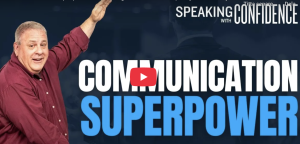
“If you want to know how an organization feels, don’t look at the strategy documents or values posted on a roll-up. Instead, listen to the everyday conversations,”
Team Antoni Explains
The Language of Leadership: Antoni Lacinai’s Global Mission to Transform Workplace Communication
Clarity has become one of the most valuable leadership skills in today’s workplace. In an environment filled with nonstop meetings, digital noise, and constant communication, many organizations still struggle to create real understanding between people.
This is where Antoni Lacinai has built his impact.
Through his Sweden-based company, founded in 2006, Lacinai has positioned communication not as a “soft skill,” but as a business-critical capability that directly influences leadership, culture, employee engagement, and organizational performance.
With a professional background that includes leadership roles in sales, marketing, and communication at companies such as Ericsson and Anixter, his work combines business strategy with human behavior. That combination has helped shape a communication philosophy centered around one core idea:
Communication shapes behavior. Behavior drives results.
Looking Beyond Strategy Documents
According to Lacinai, organizations are often too focused on polished presentations, mission statements, and corporate values while overlooking the everyday conversations happening internally.
“If you want to know how an organization feels, don’t look at the strategy documents or values posted on a roll-up. Instead, listen to the everyday conversations,” he says.
This perspective shifts attention away from branding language and toward real human interaction. For Lacinai, workplace culture is not built through slogans. It is built through communication habits repeated every day.
That belief has become the foundation of his advisory work, keynote speaking, and leadership coaching.
Communication as a Business Driver
Many organizations still treat communication as secondary to operations, strategy, or execution. Lacinai challenges that thinking directly.
“You can’t upskill your culture, but you can upskill your communication,” he explains. “Communication between people is like electricity in a modern society. Without it, we perish.”
This approach reframes communication as infrastructure rather than support.
Instead of focusing only on presentation skills, his work explores broader organizational dynamics, including:
- Leadership communication
- Employee engagement
- Customer dialogue
- Team collaboration
- Presentation effectiveness
- Workplace alignment
Together, these areas influence how organizations perform internally and externally.
A Practical Approach to Leadership Communication
One of the reasons Antoni Lacinai’s work resonates globally is its practicality.
Rather than relying on overly theoretical communication models, his frameworks focus on actionable behaviors leaders can apply immediately.
“Communication is not just about what is said, it’s about what is understood, felt, and acted upon,” he has remarked.
This distinction is important.
Many leaders focus heavily on delivering information. Lacinai emphasizes the importance of impact instead. A message only becomes effective when it creates understanding, emotional connection, and meaningful action.
That philosophy is especially relevant in modern workplaces where hybrid teams, cultural differences, and digital communication have increased the risk of misunderstanding.
Leadership Through Empathy and Clarity
Another defining aspect of Lacinai’s approach is his focus on conscious and compassionate leadership.
As workplace expectations continue to evolve, employees increasingly value leaders who communicate with empathy, transparency, and intention.
“Leaders who communicate with intention and empathy create environments where people choose to contribute at their best,” he says.
This leadership style moves beyond transactional communication and focuses instead on trust, alignment, and human connection.
It also reflects a growing understanding within organizations that employee experience directly influences performance, collaboration, and retention.
Building a Global Presence
Over the years, Antoni Lacinai has expanded his influence far beyond keynote stages.
In addition to coaching executives and leadership teams across industries, he has strengthened his authority through books, articles, media appearances, and thought leadership content focused on communication and workplace trends.
His website and digital platforms reflect the same philosophy found in his speaking engagements: simplicity, clarity, and practical value.
Rather than overwhelming audiences with academic jargon, the brand focuses on insights leaders can implement immediately in real-world environments.
This accessibility has become one of the company’s strongest differentiators.
Why His Message Matters Today
The modern workplace is becoming increasingly complex.
Organizations are navigating:
- Hybrid work environments
- Cross-cultural collaboration
- Employee disengagement
- Leadership trust issues
- Information overload
In this environment, communication is no longer optional leadership training. It is a strategic necessity.
Recognition from international business media, including Fast Company, further highlights the growing relevance of Lacinai’s work in leadership communication and organizational development.
Final Thought
At its core, Antoni Lacinai’s business is built around a simple but powerful idea:
Organizations improve when people understand each other better.
By treating communication as a strategic capability instead of a secondary skill, Lacinai has created a distinct voice in the leadership development space.
“Every conversation is an opportunity to create clarity, build trust, and drive results,” he says.
And in a workplace where clarity is increasingly rare, that message continues to resonate globally.